Showing posts with label India. Show all posts

Saturday, January 10, 2015

Perambikulam - The other side of Top Slip


 Was picked up from Valparai on this trip. Had gone up all the way from Pollachi early in the morning after an overnight journey from Bangalore. Spent ten minutes on top to have breakfast and coffee, post which we drove back and towards Top Slip. The route is fantastic and although there is a very good chance of seeing wildlife, the afternoon was quite dry.


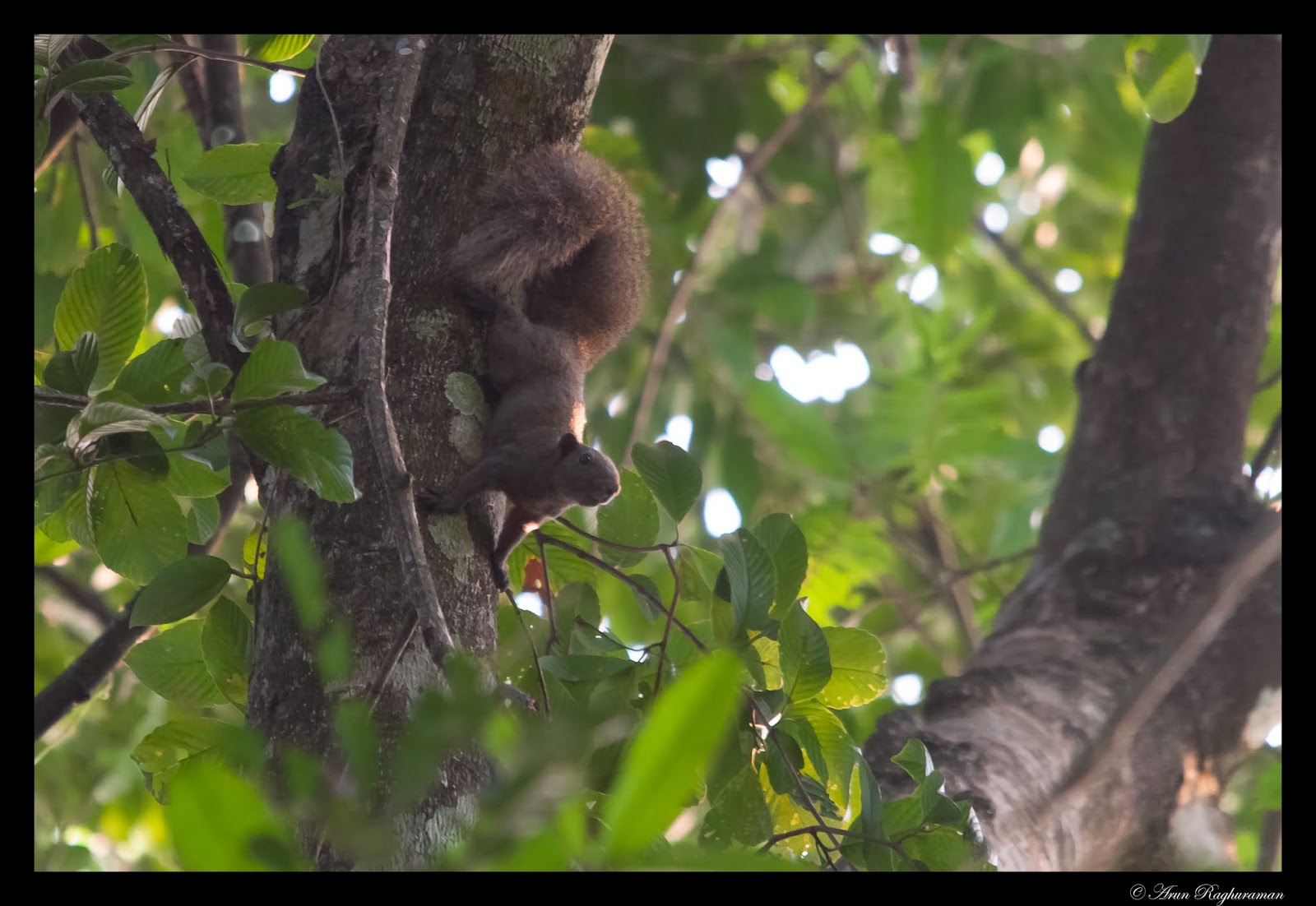
Perambikulam lies on the other side of Top Slip, on the Kerala border side and the vehicle checking was a lot more strict. The lodge itself was quite comfortably located near a village. The stay was cozy and treks into the forest were fun. Birding was quite easy and orange headed ground thrushes, jungle owlets and paradise flycatchers are very visible. A lesser yellownape woodpecker was the spot of the day. Among the mammals, we came across gaurs, nilgiri langurs and giant squirrels but my hunt for a slender loris had no results. It was mostly a lazy trip with some walking and lesser crowds compared to Top Slip.


Return to Kabini

Having spent a good part of the morning in the Bangalore traffic jams and after searching for quite a few roads, we arrived at the Jungle Lodges resort pretty late in the afternoon but just in time for the evening safari. The safari time was only about 2 hours but after the last experience there, expectations were quite high. The lodge itself hasn't changed much and neither has the forest but it has been split into two zones now with jeeps allowed into the zones at alternate safaris. The park all of a sudden felt very small because of this change.

The safaris were quite interesting that way. We did not have the devil's luck as in the previous trip but there were things to see. The only large carnivores that we saw were a few wild dogs but birding was pretty good. Somehow we saw very few elephant as well. The other herbivores were very visible with herds of gaurs and deer and mongoose scampering about.


Among the birds, we spotted a few paradise flycatchers within the campus but within the forest were a number of streaked woodpeckers, heart spotted woodpeckers, white bellied and the flamebacks. The pick of the sightings was a blue faced malkoha. The riverside near the lodge provided a few macro opportunities while spiders easily posed in the trees. The lodge was pretty crowded despite being off season and sighting being fewer due to the weekend. Overall a lazy weekend but not as spectacular as we were hoping for.


Friday, November 29, 2013

Kaziranga - With a dead lens


The last stop of the extremely long and fun trip was Kaziranga. My Sigma 150-500 had a dead auto focus motor. It had given up towards the end of the last trek in Pakke. I was still in two minds as to which lens to use. The 70-300 was great but no reach while the sigma would have the reach but would I be able to manage the focus manually was a scary thought. Finally I decided to go with the Sigma hoping I would at most lose a few flight shots but the reach was more important.


Six safaris later, things had not gone too bad. We had hit the first safari to the central zone, which had a fantastic sunset. The next two days were spent with east in the morning for the birds (mainly raptors) while the evenings were spent in the west for the rhinos, elephants and buffalos. The last day was spent in Burra Pahad, for the hoolock gibbons. None of the trips disappointed with adjutants, grey headed and Pallas' fish eagles, peregrine falcons, spotted eagles, a malkoha, loads of deer, rhinos, elephants and buffalos and finally even hoolock gibbons on the way to Burra pahad.


In the end manual focus on the Sigma worked better than I had hoped. And although my return train was delayed by 12 hours, the trip was something that really completed an year of some fantastic trips. Will be holding off on trips for a while now. Have had a few things changing, but that is a story for a different blog.


Thursday, November 28, 2013

Bird count in Pakhui - Arunachal


After the quick safari at Pobitora, the plan was to meet with the rest of the group and head out in the mini bus to Seijosa in Arunachal to break for the night. However plans have a way of going off-track. Around 6.30 in the evening it was already dark and at about 6-7 km before the Assam border, we were stopped by the commandos who warned us that the road ahead until Arunachal was not safe to travel at night. The unscheduled break at a guest house in a village nearby set us back a couple of hours in the morning but we managed to get to Seijosa safe. There was a light birding session in the morning near the base camp and after lunch we set off for the anti-poaching camps deeper in the forest.


The route was quite interesting with monitor lizards, langurs (maybe golden, couldn’t get shots to confirm) and great as well as pied hornbills. As a few of us decided to walk the last couple of kilometers, Deepak, who stayed with the jeep spotted a python on the road. The camp itself was quite comfortable especially after the stay at the village guest house. Electrified fence, couple of bedrooms with attached bathrooms, hall, kitchen and comfy beds, it was actually luxurious. Lack of running water due to elephants having messed up the pipelines even gave us an excuse to bathe in the river. 


The treks over the next few days through the forest kept us very busy. Two motorable roads, one towards dhikurai camp and the other towards Seijosa gave us some easier walks. The one along a stream and then return through the transit gave us a lot more leeches. Leech socks are not helpful at all when leeches are on the back and head, was the lesson learnt. Packed lunches and breakfasts (eaten on leaves) allowed us longer treks while Resham, our guard and guide got us to try some fruits from the forest. We trekked on an average about 10-14 km on each day and did make it to another camp (camps are 7-8 km from each other) and back on one occasion.


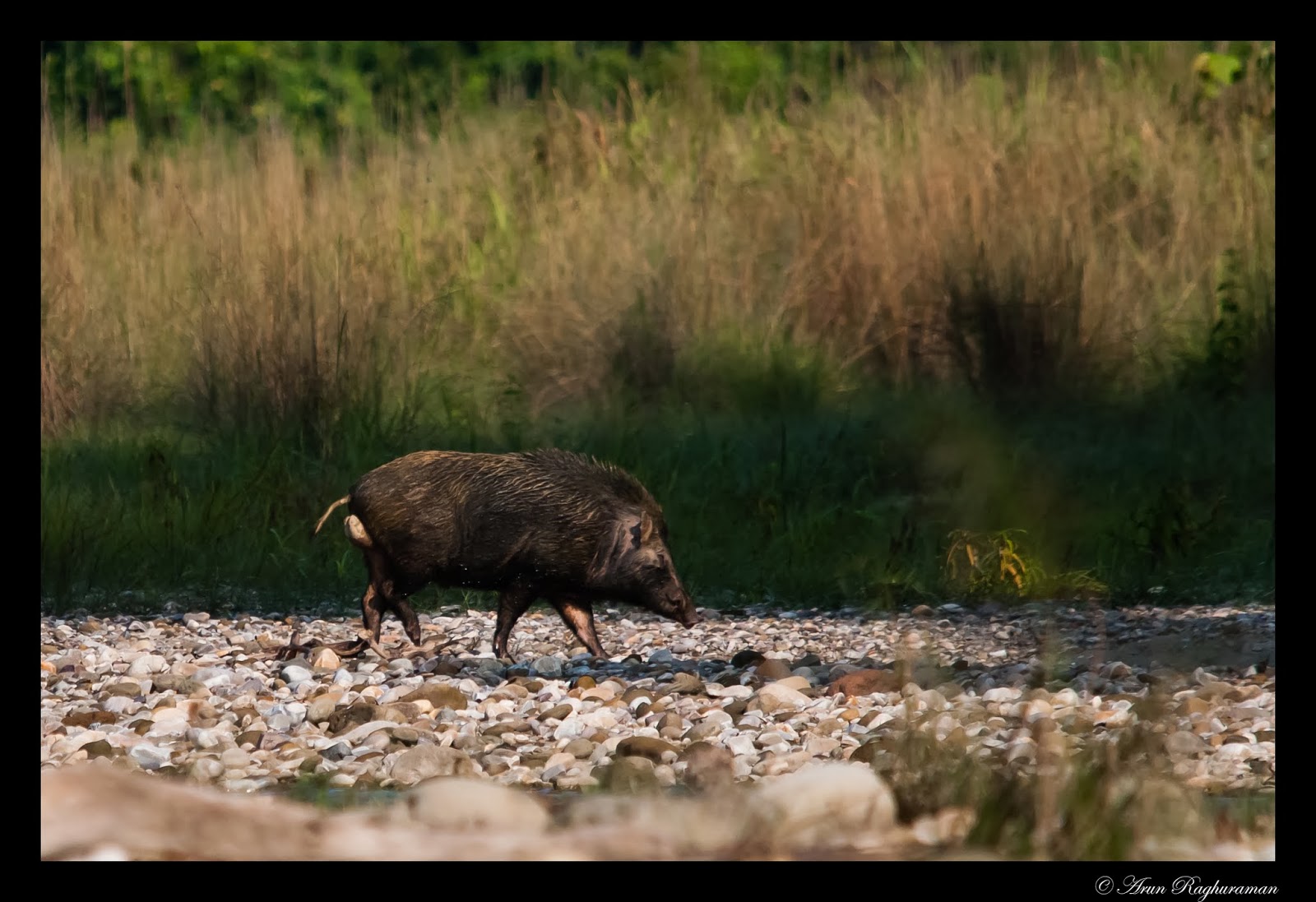
The birds and animals are extremely shy to human presence owing to the hunting in the past; however the numerous butterflies, spiders and the jungle itself add to the experience. Risham could recognize most events by sound alone and elephants he knew by smell. He pointed out tracks of porcupines, deer, dholes, tiger, clouded leopard, bears and so on whenever he found them. We heard a pack of dholes tearing into a wild boar and found the torn up carcass on the next day with paw prints of the dogs near it. We also came across a couple of wild boars, many squirrels and langurs and a snake but the real scare was when we saw a wild elephant on the roadside. While we waited, Resham shouted and whistled as he readied his gun and walked briskly towards it. Fortunately that was enough to scare it away. Among birds there were a total of close to 80 species that we had spotted in all, some of which were the wreathed, pied and great hornbills, pied falconet, Eurasian hobby, pintailed pigeons and redstarts. 


Saturday, November 23, 2013

Pobitora


Before we went carried on to Pakke, we had about half a day off at Guwahati. Leaving for Pobitora at about 4.30 in the morning, we had to take a different route as the driver deemed the regular route was not safe. We did reach Pobitora in an hour and a half but on the opposite side to the main gate. A long drive around the park through villages finally brought us to the main gate.


The park itself is quite small but with loads of rhinos. There is plenty of birding to be done as well and among the migrants, the greylag geese were already out in the plenty. Others including adjutants, nuthatches, grassbirds, and pipits were just there to be found. Most people consider the rhinos here to be quite domestic and we could see why. Although watching them later at Kaziranga gives me the feeling that rhinos everywhere in Assam seem to be a little too used to people.

Sunderbans

Was tagging along on this trip with scientists who were to review an agricultural impact project on the farmers due to intervention in terms of technology and techniques. As a result birding and wildlife took a backseat on most of the trip while the MBA grad had a field visit. The cruise of course was more than comfortable, it was luxurious.

The last couple of days however did have some visits to the National Park. The kingfishers - collared and black capped were readily visible. A few raptors, waders, whiskered terns and black headed gulls kept showing up. A water monitor and crabs were also seen at a tower.


Bharatpur - Land of snakes??

Normally I head down to Bharatpur towards the end of December, however this time we went in a little earlier in November over a weekend so Madhu could see what the place was. As always this trip to Bharatpur was as different as everyone of the other trips.

Although the train was a little bit late, we managed to spend about 10 hours on the first day and 12 hours on the second. Without a guide, we went along with the cycle rickshaw fellow carrying our baggage on the rick. The migratory ones had started arriving and the eagles (spotted) had also come down but the grass prevented us from seeing much. Still there were a couple of lifers there and a European turtle dove at the end was a nice way to wrap up the trip.

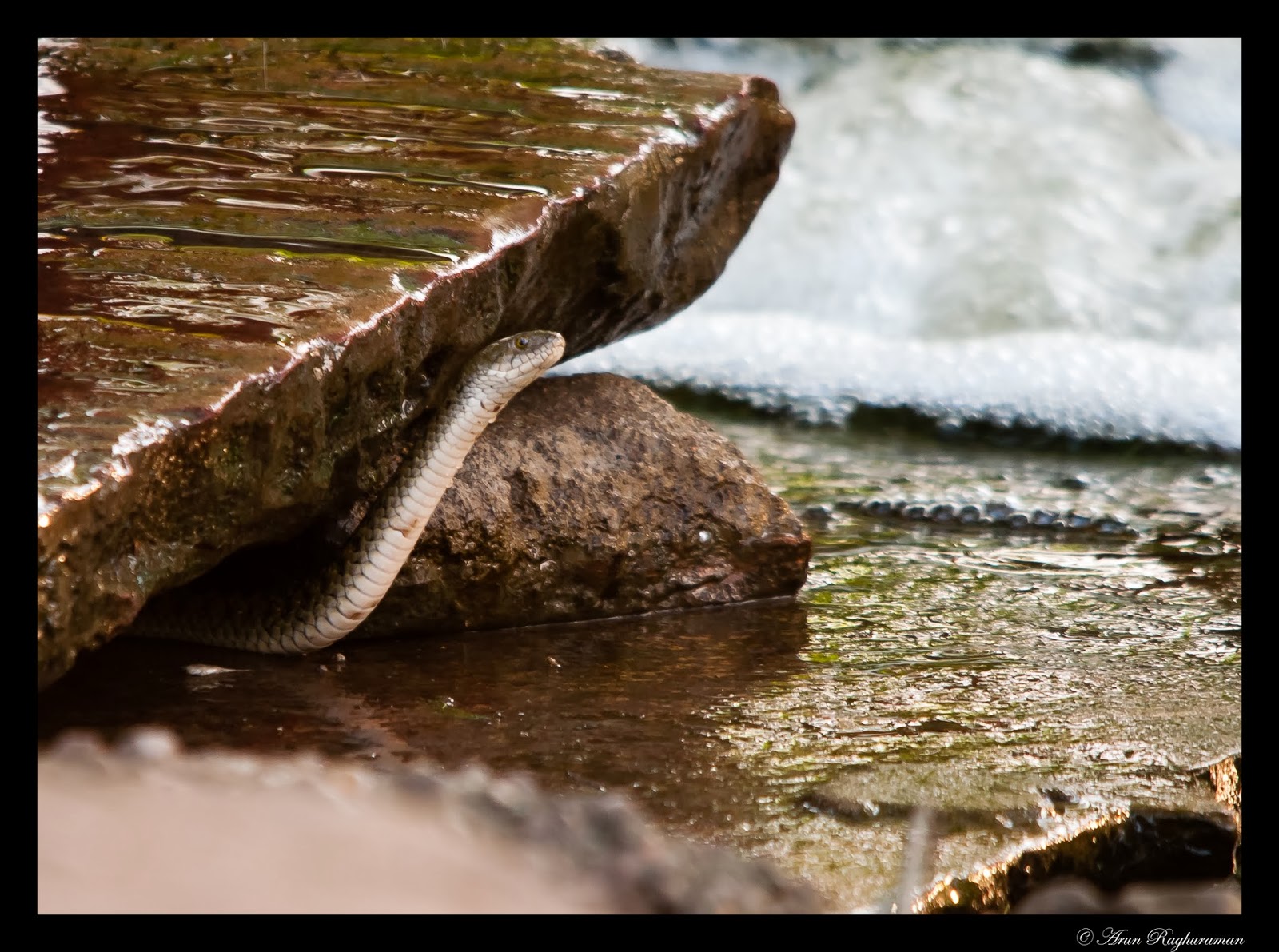
The highlight of the trip though were the snakes. We counted a total of 11 that we saw including 2 pythons, 2 cobras, checkered keelbacks and water snakes. One of the larger pythons was stalking jackals. Although it backed off when it realized we were there, the jackals were spooked and howling about continuously. Among the mammals of course were the usual jackals, boars and Nilgais. 


Monday, September 23, 2013

Birding around Sultanpur


It was meant to be a short exploratory trip to Sultanpur before the season started to see if there was any use of birding there on weekends. Madhu and me set off early morning in order to reach Sultanpur at 6.30, the opening time as given on the net. We were disappointed initially as two guides near the park explained that the park would only open in October and a group that had gotten in with special permission last week had made things worse with the article about lack of water there. In short, he explained animatedly that no more permission would be given and there was sufficient water as further water released would actually damage the nests on the banks.


As we pondered on other options and places as far as Asola Bhatti, one of the guides offered to show us spots nearby for 500 bucks. We tried to bargain but he said others often paid much more. Having nothing better to do, not wanting to waste the morning hours and expecting to see a couple of lakes with a few regular birds for a couple of hours, we said yes. We set out on triples on the pulsar, with two fairly large backpacks quite uncomfortably assuming it would be over soon.


 Five hours later as Madhu and me were ready to drop dead from the trip, our 71 year old guide was still pushing us to find a few more species. A pheasant tailed jacana will be generally here; Streaked weavers just around the bushes; Kentish plovers if we keep looking. Although those 3 were the ones that we missed, photography was difficult with overcast conditions and the birds quite shy as most were found in far off fields and lakes with less human activity. The spotted list though consisted of multiple painted snipes, little green herons, sarus cranes, little ringed plovers, glossy ibis, godwits, eurasian curlews, european rollers, eurasian thick knees, blue cheeked bee eaters, pratincoles, other waders and a lot more. The number of species we covered till noon was incredible considering migrants haven't even started arriving.


After some lunch and rest at the tourism department restaurant, we set out to get back home. The return journey wasn't pleasant with rains and the bike stuck in mud but we were glad it had started to rain only after the birding was done. A tiring drive later, we are hoping to probably have another shot at this again maybe even with some migrants thrown in.